The Dark History of Jehovah’s Witnesses’ Blood Policy and Reversal
He didn’t realize there was a patch of black ice on the road. His car swerved into traffic, and then he couldn’t remember what happened next until waking up in a hospital bed.
He hears through beeping noises by his side that a blood transfusion is needed to survive. He’s asked if that’s okay.
A “yes” didn’t come immediately to his lips.
“Can you nod for me?” A nurse in scrubs asked.
Physically, he could, but on an emotional, psychological, and spiritual level, a nod felt torturous. The nurse looked at him expectantly as thoughts flooded his mind about the consequences of accepting a blood transfusion. It was a dilemma that would seem impossible for medical personnel to understand.
How could he explain that if he were to accept the blood transfusion, life as he knew it would end? Whether he accepted or rejected the blood transfusion, both decisions felt like dying.
WWII and The Blood Policy
The Jehovah’s Witnesses instituted a blood treatment policy in 1945 that wouldn’t be strictly enforced until 1961. Jehovah’s Witnesses historically believe that they belong to The Kingdom of God and will not swear allegiance to any nation. Because of this, Jehovah’s Witnesses served as conscientious objectors.
Jehovah’s Witnesses were placed in Nazi concentration camps, but those who died and survived weren’t honored. Instead, they were condemned for political objection. After WWII, Jehovah’s Witnesses had employment opportunities, housing, and more impacted by discrimination for their refusal to participate in the war.
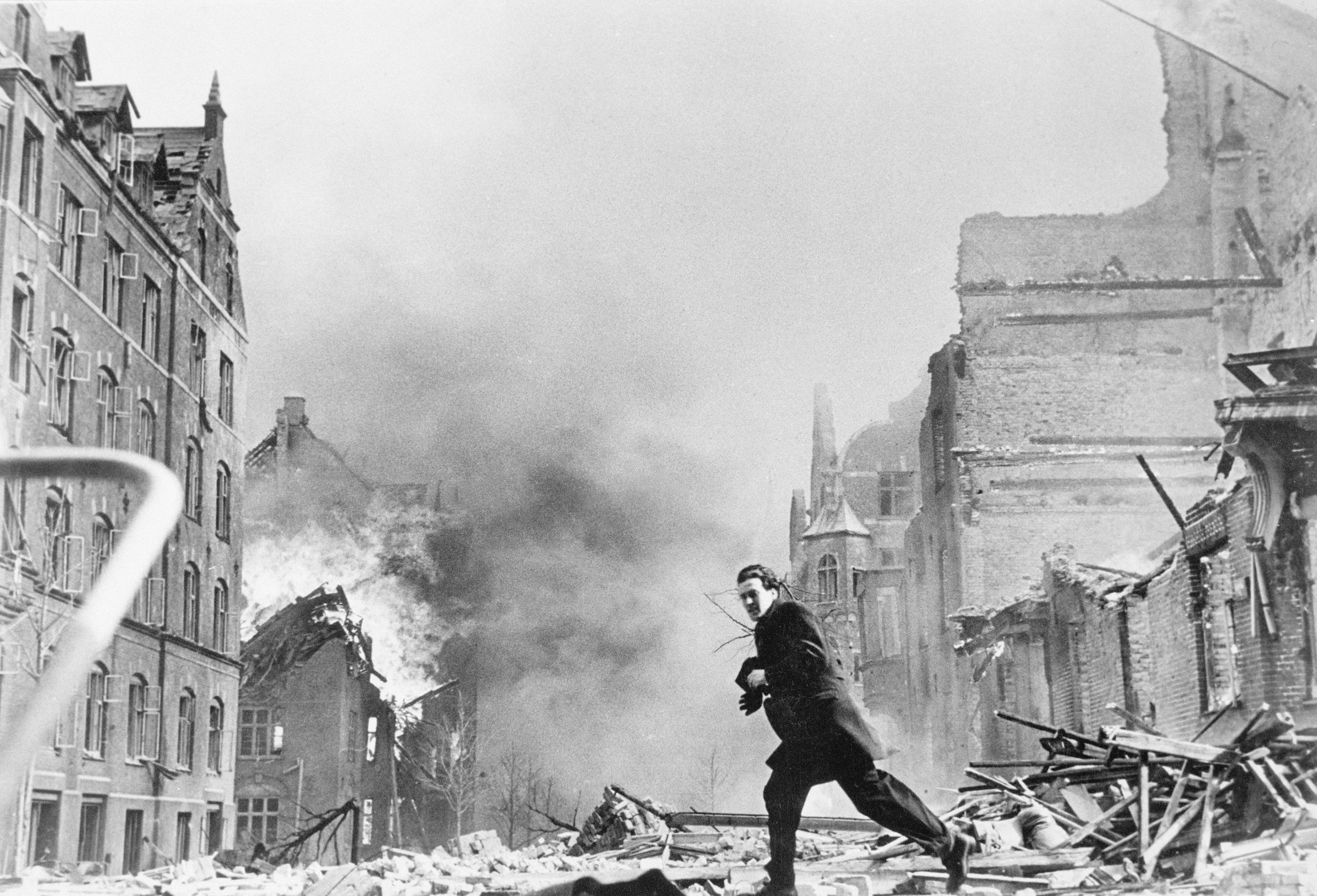
Photo by National Museum of Denmark on Unsplash
The response to heightened global persecution in Europe and North America post-WWII, increased moral rigidity among Jehovah’s Witnesses. One of these policies that arose from the hypervigilance and moral panic was the blood policy.
The Watchtower Bible and Tract Society (governing body for Jehovah’s Witnesses) interpreted Genesis 9 and Leviticus 17 as guidance to not accept blood transfusions or even donate blood. The perception was that blood transfusions were the consumption of blood and pagan practice. The practice of blood transfusions was considered so awful by Jehovah’s Witnesses that some (not all) congregations believed it was an unforgivable sin, and would cause a person to lose their salvation. Other Jehovah’s Witnesses believed a blood transfusion would cause irreversible damage to a person’s relationship with God.
Enforcement for Opposition
Disfellowshipping, shunning, or being removed from the congregation of Jehovah’s Witnesses did not begin until 1952. While the Jehovah’s Witnesses were critical of excommunication by the Global Catholic Church in the late 1940s, their publicized perspective changed just a couple years thereafter of making statements of condemnation for excommunication in their literature.
In 1952, Jehovah’s Witnesses began to teach that having congregants who did not follow the doctrines would lead to spiritual impurity of the congregations. To maintain cohesion of beliefs without dissidence, members began to not only be removed from congregations but cut off completely from other members. This could include communication, occupational, and financial abrupt cut-offs.

Photo for Getty Images, Unsplash+
The belief of disfellowshipping, now called shunning or being removed, taught congregants that they would be kept safe by this practice, but they were led by fear. The consequences of breaking Jehovah’s Witnesses’ policies would be catastrophic.
By 1962, donating blood or receiving blood transfusions with consent would lead to disfellowshipping. Thousands of Jehovah’s Witnesses since 1962 could be alive today if they didn’t believe that accepting a blood transfusion would be worse than death itself.
Between the Apocalypses
WWII felt apocalyptic for Jehovah’s Witnesses. According to the Jehovah’s Witnesses records, 1,500 Jehovah’s Witnesses died by execution or by abuse and neglect in prisons and concentration camps. Reports on the numbers of Jehovah’s Witnesses who died by Nazi persecution varies because of ongoing deprioritization by Holocaust organizations to research the experiences of Jehovah’s Witnesses living in Nazi-occupied Europe.
Deprioritizing the study of Jehovah’s Witnesses’ experiences in Nazi-occupied Europe is based upon historians sorting what is religious persecution and what is genocide. According to historians, if what is being persecuted can be changed in beliefs and behaviors, it’s not considered genocide. This is why historians name Jewish experiences in Nazi-occupied Europe as genocide because of their ethnicity, but Jehovah's Witnesses experiences as religious persecution.
Jehovah’s Witnesses however don’t perceive themselves to have been persecuted for beliefs and behaviors that could have been changed. They recognize what happened during the Holocaust as persecution for both their faith and identity. In Jehovah’s Witness theology, they teach that we have been in The Last Days since 1914, the time of WWI.
The End Times is believed by Jehovah’s Witnesses to begin with global secularism happening in tandem with the falls of governments. During this, people may adopt the Jehovah’s Witness faith. If not, when the Battle of Armageddon comes, all governments and “wicked people” will be destroyed.
While Jehovah’s Witnesses may be perceived as pacifists to the outside world, they’re not. It’s like 144,000 sleeper agents. They’re waiting for the order to act and destroy those who don’t share their beliefs in The Battle of Armageddon.
From Secularism to militantism
Disfellowshipping is abusive, and that part of Jehovah’s Witness theology didn’t come into the religion until the beginning rise of secularism in the 1960s. With an increase of higher education and employment for women, decline of church attendance, increase of sex-positive attitudes, and begin of desegregation enforcement, white patriarchal religious institutions became afraid. And groups like Jehovah’s Witnesses started to rule their congregations by authoritarianism.
Jehovah’s Witnesses taught that the strictness of policy enforcement was from love and to protect the flock or group, pointing back towards the Holocaust and treatment in post-WWII era as a kind of proof for complete, unwavering, and unquestioning obedience. Over and over again, the Watchtower promised Jehovah’s Witnesses that they would be kept safe only if they followed with strict adherence to the rules. If a person strayed, protection by the Jehovah’s Witnesses could be removed in an instant.
The enforcement was militant-like because the group wasn’t pacifist. The doctrine was preparing Jehovah’s Witnesses for the Battle of Armageddon. And since 1914, Jehovah’s Witnesses have been taught that The Battle will be any day now.
Retention Issues
Like its name suggests, the governing body of Jehovah’s Witnesses, watches from above. The Jehovah’s Witnesses’ governing authority, The Watchtower, makes decisions from observations. And it has been observed in recent years that growth is stagnating in North America and Western Europe, which may place financial strain on the organization. And up to two-thirds of those raised Jehovah’s Witness are leaving the faith in adulthood.
The authoritarian-style of leadership was meant to prevent members from leaving Jehovah’s Witness, but even with facing shunning because of practice non-adherence, people are still leaving Jehovah’s Witnesses.
About the Jehovah Witnesses’ Blood Policy Reversal
In March 2026, Jehovah’s Witnesses began allowing members to remove and store their own blood that could be used for future blood transfusions in medical care and procedures. This month, the blood policy allowance was expanded to permit Jehovah’s Witness members to receive red cells, white cells, plasma, and platelets by outside donors.
There’s members of Jehovah’s Witnesses that do not recognize these decisions as a reversal of the 1945 blood policy, but it is. The reason why they don’t recognize this is likely from the discrediting of science in the Jehovah’s Witness group. For instance, only one-quarter of Jehovah’s Witnesses believe in evolutionary science so most adherents have a distorted view of biology.
While this policy reversal will undoubtedly save many lives, there continues to be widespread misconceptions about science within the Jehovah’s Witnesses. Without understanding of medical sciences, it is not only complicated to make well-informed medical decisions, but it places people’s health at risk.
The Grief of Mishearing God
There is a complex grief that has arisen for many current and former Jehovah’s Witnesses who are knowledgeable about biological sciences. They recognize that this new message or the mishearing of God’s words points to something dark. What they were taught was a peace-loving group, wasn’t actually peaceful. Coercing people to die from bleeding out comes from a violent theology.
I don’t know a single Jehovah’s Witness who hasn’t known of someone dying or being shunned because of the previous blood policy. The secondary trauma is impactful.
If you are waking up to a new understanding about how church policies can be violent, you are not alone, and you do not need to grieve in isolation. Healing from this religious trauma and grief happens through reclamation of fellowship— a kind of fellowship that is not governed by fearmongering, stripping away of autonomy, and demand for unquestioning obedience.