Protestants and Catholics have been in conflict for centuries, most of the conflict being marked with brutality— bombing, incarceration, beheadings, stretchers, iron boots, and more. It’s spooky to consider that this church history of Protestants and Catholics warring with each other is widely ignored when the last fighting occurred in Northern Ireland just 28 years ago!
Catholics and Protestants fighting is rarely (if ever) about theological understanding as much as it is about power and control. Theological viewpoints have been used by the groups to shape public opinion, influencing elections, infrastructure, and the economy. One major point of contention between Catholics and mainstream Protestants is purgatory.

For generations, no one in my family was Catholic. And for my grandparents and parents who converted to the Baptist denomination during the Satanic Panic, membership in Protestant congregations was documented intergenerationally with Methodists, Pentecostals, Lutheran, and Church of the Brethren. But based on statistics, it makes sense for Catholicism to not be a part of my family history. 2% of those raised Protestant convert to Catholicism and 14% of those brought up in Catholic families converted to Protestantism.
There’s a cultural element that drives conversions to Protestantism or Catholicism.
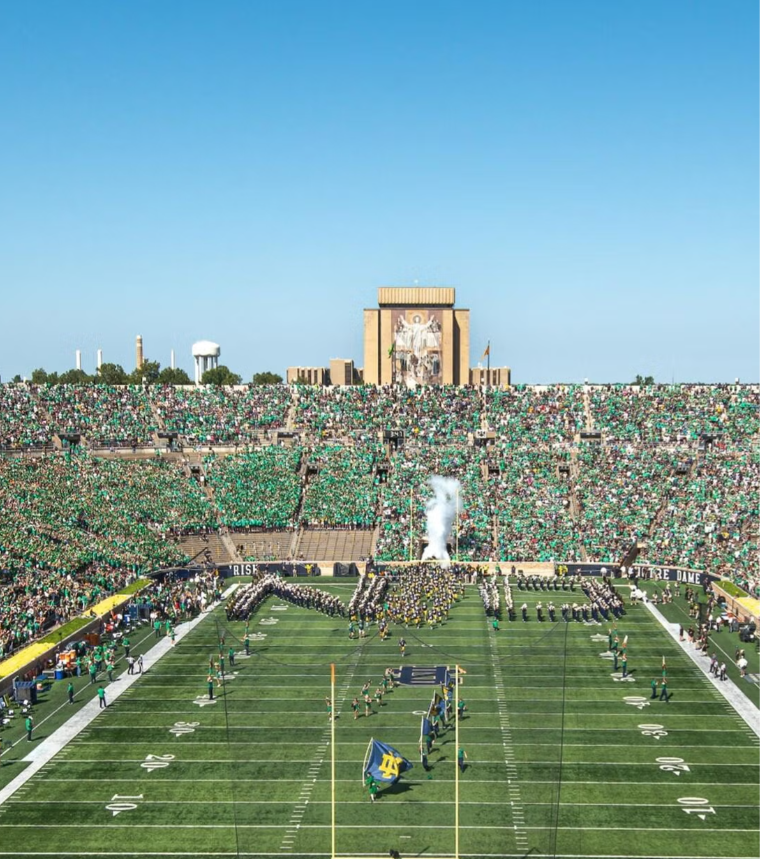
I was aware at a young age of the animosity between Protestants and Catholics with growing up Protestant in what is known as The Home of Notre Dame. In French, Notre Dame means “Our Lady (the Madonna).” Protestants would sometimes dig up their yards after buying a new house to find buried Madonnas from Catholics because they believed the buried statues would bring them bad luck.
Old Testament passages of the Bible referring to idolatrous graven images and the command to destroy them, were popular sermons in Baptist churches I grew up in. The pastors or teachers would explicitly mention Madonna statues or crucifixes with the dying body of Jesus that needed to be demolished if found in one’s possession. On occasion, I would hear former Catholics who converted to the Baptist faith, take a sledgehammer to the Madonna and crucifixion imagery they once held dearly to signify their commitment to “the way, the truth, and the life,” coming to the belief that Catholicism was a false doctrine.
My family were Notre Dame fans, which was considered quite scandalous amongst other Baptists. After every touchdown at a Notre Dame home football game, fans would raise their arms like a goal post and exclaim, “TOUCHDOWN JESUS!” simply as a joke. The university library behind the endzone with a mosaic of Jesus raising his arms in a welcoming gesture appeared uncannily similar to the official hand sign in American football that a touchdown was just scored.
While not an American football fan myself, I would hear my family be told that raising their arms in celebration for a touch down while saying the name of Jesus was breaking the third commandment of taking the name of the Lord in vain. What I heard from other Protestants towards my family who were Notre Dame football fans wasn’t trash talk for competitive banter about their teams. It reflected something deeper— denominational fanaticism.
University campus by cphotos for unsplash
While conflict between Protestants and Catholics is not to the degree of violence like in years past, it exists, and the contrast becomes more apparent on holidays like Halloween and All Saints’ Day, the Catholic adaptation celebrations of Samhain (pronounced “SOW-in”).
Samhain was observed by Celtic pagans from sundown on October 31 to sundown on November 1 to acknowledge the thinning of the veil and honor its reverence. The veil was a symbolic separation between the land of the living and the spiritual world beyond. For most of the year, Celtic pagans believed the veil was thick enough to protect the living from uninvited spirits. When the veil became thinner as the nights grew longer, and the harvest came to an end, Celtic pagans no longer believed the veil could Ward off uninvited spirits. Precautionary measures were made for spirit guests such as disguising one’s face, carving harrowing imagery into root vegetables that were lit by candles, and setting extra places at the supper table before the spirits left to return to their world.
We know that the risk of mortality skyrockets in the wintertime because of preexisting healthcare conditions and contracting infections with suppressed immune health. When I look at Samhain through the lens of a healthcare worker, I recognize that this ancient practice prepared the living to say their final goodbyes. These practices seemed to instill hope that their loved ones would experience peace in death and hold onto the wish that maybe they could speak to each other again.
Catholicism rose from the pagan, Roman Empire. The earliest popes from the Holy Roman Empire recognized that for pagan to Christian conversion in medieval Europe, paganism could be observed from a cultural lens.
As Europe maintained its pagan cultural practices while adopting Christian spiritual beliefs, European Protestants, who rose up centuries later were not as open to paganism. Early Protestants prided themselves in the mass production of Bibles using the new printing press. Protestants to this day, claim that this made Christianity more accessible, but during the Protestant Reformation, less than 10% of Europeans could read.
Protestants not just discouraged but condemned pagan practices that were practiced for thousands of years, including developing artistic works to honor spiritual guides and communicating with the spiritual world. Early Protestants would punish such practices by incarceration, torture, or death. This included praying for souls in purgatory.
For thousands of years, it is well-documented that people believed spirits wandered this earth to learn from their mistakes and teach others to not do the same. Catholics developed the idea of purgatory which essentially contained “wandering” souls to prevent the dead from haunting the living. It was from this Catholic theological interpretation of European pagan beliefs that All Hallow’s Eve and All Saint’s Day were born.
Immediate spiritual judgment after death is a pillar of Protestant theology. This kind of catastrophic theology positions those in power to have authoritarian control. Without purgatory or speaking with those in the spiritual world, Protestants have to rely on Protestant theological interpretations as barriers to literacy remain. Nearly half of Canadian adults have literacy levels of below high school, and 54% of American adults with literacy levels of below sixth-grade. However, 63% of adults in North America are Christian.
Ironically, a Christian Post article mentioned that 44% of American adults surveyed said that they don’t believe Drag Story Hour to be child-appropriate.
The theology of immediate spiritual judgement after death, celebrated destruction of art, condemnation of continuing relationships with those who have passed on, and biblical inerrancy when literacy is not accessible for all— positions religious leaders to have authoritarian control.
Conflict between Protestants and Catholics is rarely about a relationship to God, but rather the relationship to power by controlling the cultural and spiritual narrative.